Settling the Score: Why We Built an AI Arbitration council
Jan 29, 2026
Tom & Anand
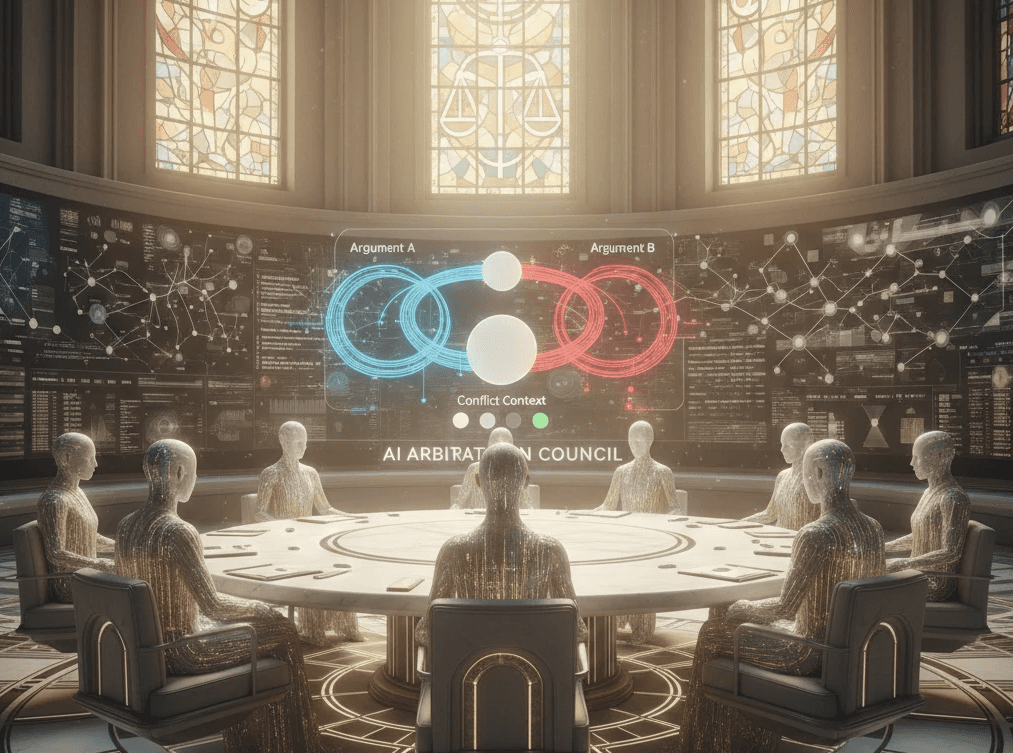
We’ve all been there. You’re locked in a debate with a co-founder, a partner, or a friend. You know you’re right. They know they’re right. And asking a mutual friend to mediate is a trap—they’ll either pick a side (ruining a friendship) or stay annoyingly neutral (solving nothing).
We realized the world didn't just need another mediator; it needed a truly independent, neutral third party that doesn’t care about your feelings, only the facts.
So, we built the AI Arbitration Council.
What We Made: The Wisdom of the Silicon Crowd
The AI Arbitration Council isn't just a chatbot that flips a coin. We built a system that mimics a real-world tribunal.
Here is how it works: you provide the Conflict Context and the two opposing arguments (Argument A and Argument B). Then, instead of relying on a single AI model which might have its own "biases" or hallucinations, our tool convenes a council of independent AI judges.
You can scale the "court" to your needs:
3 Judges: For quick, clear-cut disagreements.
5 Judges: For more nuanced debates.
7 Judges: For when you need the maximum diversity of "perspective."
Each AI model independently reviews the case, weighs the logic of both sides without emotional baggage, and casts a vote. The result? A verdict backed by a consensus of digital minds.
The Benefits: Why Robes Are Out and Code Is In
Radical Neutrality: An AI judge doesn't care who does the dishes more often or who invested more seed capital. It looks strictly at the logic and context provided. It is the ultimate unbiased third party.
Safety in Numbers: By using a council system (3 to 7 judges), we mitigate the risk of one AI "hallucinating" or making a weird logic leap. It’s the "wisdom of the crowd"—if the crowd was made of supercomputers.
Speed & Privacy: No scheduling conflict resolution meetings. No airing your dirty laundry to friends who will gossip later. You get an answer in seconds, for free, without needing API keys.
Emotional De-escalation: Sometimes, hearing "You are wrong" from a human makes you defensive. Hearing "Argument B is more compelling because..." from a machine allows you to accept the loss with your ego intact.
The Cons: We’re Honest About Limitations
We built a powerful tool, but we believe in transparency. Here is what you need to keep in mind:
Garbage In, Garbage Out: The AI can only judge based on what you tell it. If you write a Shakespearean masterpiece for your argument and give your opponent a three-word summary, you’re going to win—but it won’t be a fair win.
The "Human Element": AI is brilliant at logic, but it lacks empathy. It might miss the subtle emotional undercurrents that a human mediator would catch. It solves the dispute, but it might not heal the relationship.
Not a Court of Law: This is for settling disputes between people who want a solution. Please don’t take the output to a real small claims court (yet).
Try It Yourself
We are currently in a 100% Free Beta. We want you to break ties, settle bets, and resolve deadlocks using the technology we’ve built.
Whether it’s a dispute over product roadmap priorities or who should have won the 1998 MVP award, put it to the council.
Enter the Council Chambers here
Curious about tools, AI and how they can help you and your organization? Click the button below :)